How to Create Dreamy Children’s Portaits
That feel like a storybook
There’s something special about a photograph that makes you pause for a moment.
Perhaps it’s a child holding a lantern in a quiet woodland, the warm light catching their face. Perhaps it’s a little one completely absorbed in an old storybook, unaware of the world around them. Or maybe it’s simply the way the evening sun filters through the trees as a child wanders through the grass.
These photographs feel a little different from traditional children’s portraits. They don’t just show us what a child looks like. They invite us into their world.
Dreamy children’s photography brings together beautiful light, thoughtful composition, natural expressions and a little imagination to create portraits that feel almost like illustrations from a favourite storybook – while remaining grounded in real childhood.
But what makes these photographs work? And how can we create that feeling without elaborate sets, costumes or heavy digital effects?
Here are a few of the ideas behind creating children’s portraits that feel timeless, atmospheric and full of wonder.
1. Start With the Light
If there’s one element that can transform an ordinary scene into something extraordinary, it’s light.
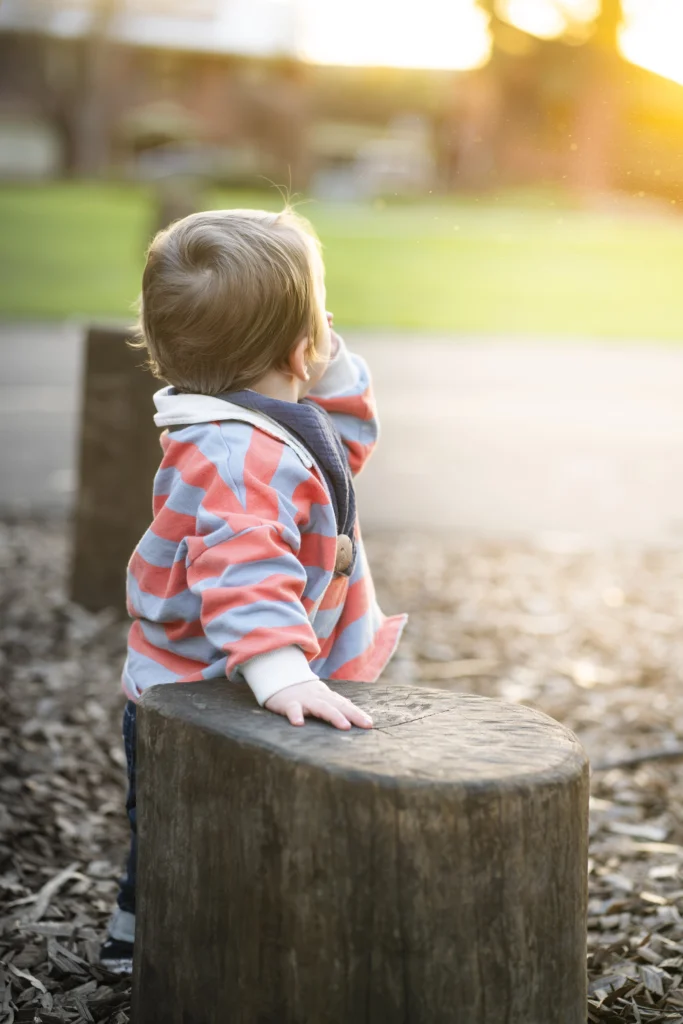
Soft evening sunlight filtering through trees, a warm glow falling across a child’s face or the gentle contrast between a shadowy woodland and a sunlit clearing can completely change the feeling of a photograph.
Golden hour is particularly beautiful for outdoor children’s photography. As the sun sits lower in the sky, the light becomes warmer and often softer, creating a lovely sense of depth and atmosphere.
In a woodland, light filtering through the leaves can draw attention to a child while allowing the surrounding trees to frame the scene. In an open field, backlighting can create a delicate glow around their hair and clothing.
The important thing isn’t simply finding the brightest spot. It’s noticing where the light falls, what it illuminates and how it makes the scene feel.
Sometimes, the most beautiful light is found just beyond the obvious place to stand.
2. Let the Environment Tell Part of the Story
A dreamy portrait doesn’t need an elaborate backdrop. Often, the natural environment provides everything the photograph needs.
A quiet forest can suggest adventure and mystery. Long grass can make a child feel as though they’re exploring a world of their own. An old tree, a winding path or a patch of sunlight on the ground can become an important part of the story.
When choosing a location for children’s portraits, think about how the surroundings contribute to the feeling you want to create.
Would a woodland suit a child who loves exploring? Would an open field create a sense of freedom? Could a quiet corner of a garden become the setting for a little imaginary adventure?
The environment should complement the child rather than compete with them.
This is also why location scouting and planning matter. Finding the right background, considering the direction of the light and knowing where to position the child can make the difference between a photograph that simply records a moment and one that draws you into it.
3. Give the Photograph a Little Story
One of the loveliest things about children’s photography is how easily ordinary objects can become part of an imaginary world.
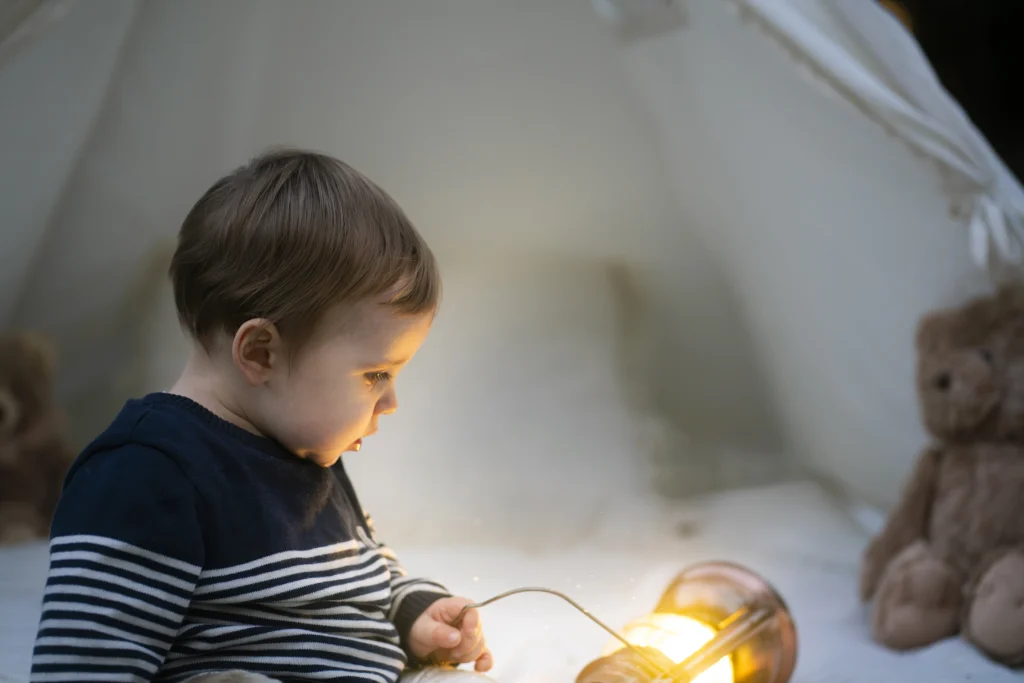
An old book might suggest a story waiting to be discovered. A lantern can turn a woodland walk into an adventure. A favourite teddy bear can become a trusted companion on an expedition through the grass.
These small details give the photograph a sense of possibility.
The key is to keep the idea simple. A single, carefully chosen prop often tells a stronger story than a scene crowded with decorations.
Think about what the child might naturally do with the object. Rather than asking them to hold a book and smile at the camera, let them explore its pages. Instead of making a lantern the centre of attention, let it become something they carry while looking around their surroundings.
The child remains the main character. The props simply give their imagination somewhere to go.
And the story doesn’t have to be planned down to the smallest detail. Sometimes, a simple idea is enough to get things started, leaving room for the child to take it in their own direction.
4. Let Children Be Children
It’s tempting to think that dreamy portraits require a child to sit perfectly still, look thoughtful and follow every instruction.
In reality, some of the most compelling images come from expressions and interactions that happen naturally.
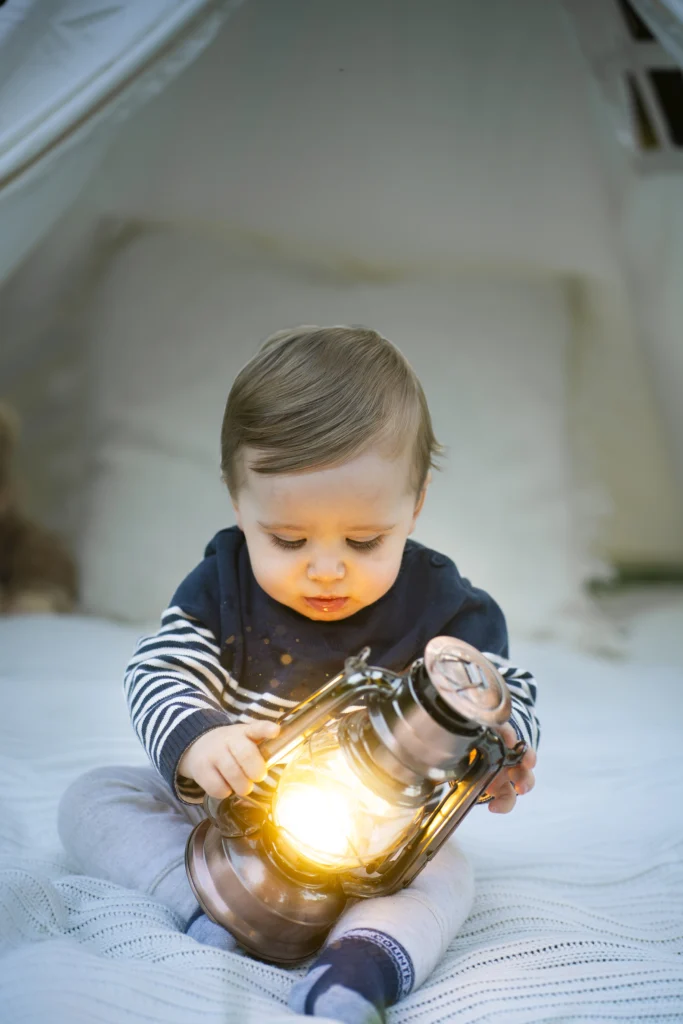
A curious glance. A moment of concentration. A small smile that appears when a child discovers something interesting. Even a little uncertainty can add personality and honesty to a portrait.
This is why a relaxed, child-led approach matters so much.
Rather than expecting children to perform, give them something to engage with. Let them turn the pages of a book, investigate a fallen leaf, cuddle their favourite toy or wander along a path.
Gentle guidance can help shape the photograph, but there should still be room for the child to respond in their own way.
Some children are naturally expressive and energetic. Others are quieter observers who take their time to warm up. Neither needs to become someone they’re not for a beautiful portrait.
The aim isn’t to manufacture a particular expression. It’s to create the conditions for genuine moments to happen.
5. Keep the Styling Thoughtful and Simple
Clothing, colours and textures can have a surprisingly strong influence on the atmosphere of a photograph.
Soft, earthy colours often sit beautifully within natural environments. Cream, muted brown, olive, dusty blue and burgundy can complement woodland settings without drawing too much attention away from the child.
Textures such as linen, cotton, knitwear and natural fabrics can add visual interest while keeping the overall feeling relaxed.
The same principle applies to props. An old-fashioned book, a woven blanket or a simple lantern may contribute more to the story than something bright, oversized or overly decorative.
It’s not about making every detail perfect. It’s about ensuring the different elements work together.
A useful question to ask is: does this detail help tell the story, or does it distract from it?
When the styling is considered but understated, the child’s expression and personality remain at the heart of the image.
6. Use Composition to Create a Sense of Wonder
The way a photograph is framed can influence how we experience the scene.
Including branches around the edges of a woodland portrait can make the viewer feel as though they’re peeking into a hidden world. Shooting through softly blurred leaves can create depth. Leaving space in front of a child who is looking or walking into the distance can suggest curiosity about what lies ahead.
You can also vary the distance.
A closer portrait might reveal a thoughtful expression or the quiet concentration of a child reading. A wider photograph can show the child within their surroundings, making the environment feel like part of the story.
Neither approach is better than the other. They simply tell different parts of it.
The most interesting galleries often combine both: photographs that bring us close to the child and others that allow us to appreciate the little world around them.
7. Let Editing Enhance the Feeling, Not Replace It
Editing can help bring the different elements of a photograph together.
Warm highlights, gentle contrast, carefully balanced colours and softened backgrounds can contribute to a dreamy, cohesive finish. Subtle adjustments can also help direct attention towards the child and preserve the atmosphere of the original scene.
But dreamy doesn’t have to mean heavily processed.
You don’t need to transform the sky, add elaborate fantasy elements or digitally construct an entirely different world to create an image that feels special.
In fact, the magic can be more convincing when the photograph still feels real.
A child standing beneath the trees, illuminated by beautiful light, can leave plenty to the imagination without needing anything added afterwards.
The goal is to enhance what’s already there – the light, the setting, the expression and the feeling of the moment.
8. Leave Room for a Little Imperfection
Childhood isn’t perfectly arranged.
Hair falls across a face. Clothes crease. A child gets distracted by something unexpected. The moment you thought you were going to photograph turns into something entirely different.
And sometimes, those are the moments worth keeping.
A photograph doesn’t need to be flawless to be meaningful. In some cases, a little imperfection makes it feel more personal and alive.
Dreamy children’s portraits can be carefully considered without feeling rigid. There can be a creative idea behind the photograph while still allowing the child to move, explore and be themselves.
That’s where the balance lies: thoughtful planning, beautiful light and enough freedom for real childhood to find its way into the frame.
Creating a Little World of Their Own
These ideas are at the heart of Little Dreamers, a creative children’s portrait experience from Lightframe Photography in Adelaide.
Each session begins with a simple idea: to create a small, beautiful world around your child, using natural surroundings, thoughtful props and beautiful light.
Perhaps it’s a woodland adventure with a lantern. Perhaps it’s a quiet moment with an old book, a favourite teddy or a blanket beneath the trees. Or perhaps your child has a little world of their own that we’d love to bring into the photographs.
The creative direction gives us a starting point, but the experience remains relaxed and child-led. There’s no expectation for your child to perform, and no need for elaborate costumes or fantasy sets.
Instead, we bring together the elements that matter: a thoughtful concept, a suitable location, beautiful light and the freedom for your child to simply be themselves.
The result is a collection of portraits that feels personal to them – photographs with a little atmosphere, a little imagination and plenty of room for you to see your child in a new light.
Because childhood already holds so much wonder. Sometimes, we simply need to photograph it in a way that lets us see it.
Discover Little Dreamers
If you’d love a set of creative, storybook-inspired portraits of your child, explore the Little Dreamers experience at Lightframe Photography.
A little bit of wonder. A little bit of imagination. And your child, exactly as they are.
Leave a Reply